
“Younger drinkers just don’t carry the same baggage around ceremony and bottles. They aren’t interested in long wine lists, awards and wanky wine language – they’re seeking wine that’s approachable, easy to understand and good quality. They also care about where things come from and what they cost the planet.”
Customer orders a glass. You open a bottle. A day later, there’s still a few serves left – do you:
a) Pour the wine (and the revenue it could have been) down the drain?
b) Keep it, and take a punt on customer satisfaction when the next person orders?
Lucan Creamer from No Offence Wines is tackling some deep-seated bar habits with their kegged wine system – the quality of independently made wines, without the wastage and footprint of bottles.
Find out how it works (and what patrons really think) here, catch him at our ‘Last Call for Old Habits’ panel at Fine Food and try the goods for yourself at Networking Behind the pass.
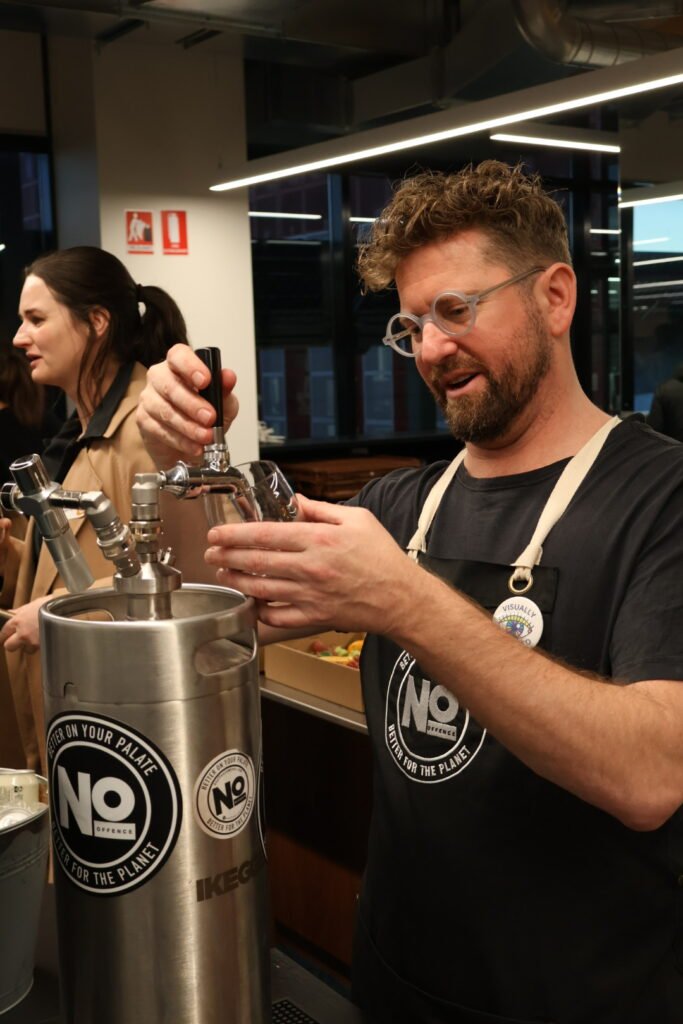
How did No Offence Wines come about (and what made you think the industry was ready for it?)
Honestly, it started with a pretty simple bit of frustration: incredible wine, made by independent winemakers who care about how it’s grown and made, getting poured into single-use glass, shipped around, and then half of it wasted once a bottle’s open behind a bar. We looked at what the beer world had already figured out with kegs – freshness, less waste, better margins – and asked why wine was still stuck in 1850. At the same time, the wine industry was grappling with reducing consumption and looking for innovative ways to connect with today’s drinkers. Venues were already feeling the pain of bottle wastage and drinkers were already telling us they were often disappointed by the freshness of wine in venues. We weren’t creating a need, we were just answering several in one solution..
How does kegged wine improve margins?
It comes down to spoilage, really. A bottle that’s opened and not finished is literally money down the drain. Keg wine is protected from oxygen and stays fresh on tap for weeks, not days, so venues aren’t tipping out half-poured bottles at the end of service. Faster pours from a tap means faster service and not only happier customers but more sales per hour. No spoilage, no corkage waste, no breakages, less storage and less handling. It’s the “earn more, waste less, serve smarter” thing – that’s not just a tagline, that’s the actual mechanics of the model.
With the benefits you outline, you’d think operators would be the easy sell and drinkers the hard one. Has that been your experience, or has it played out differently? Where do you think the resistance is coming from?
It’s actually flipped more often than people expect. Drinkers, especially once they taste it, don’t care where the wine came from – they care that it’s fresh and that it’s good quality. Operators can be the harder conversation, because there can be a legacy perception that tap wine means bag-in-box servo wine from twenty years ago. The resistance isn’t really about quality – once people taste it, that argument’s over in about ten seconds – it’s about unlearning an old category. We spend more time re-educating “wine on tap” as a premium category than we do convincing anyone the wine itself is good.
Why do you think younger generations are more open-minded and even excited about keg/tap wine?
Younger drinkers just don’t carry the same baggage around ceremony and bottles. They aren’t interested in long wine lists, awards and wanky wine language – they are seeking wine that is approachable, easy to understand and good quality. They also care about where things come from and what they cost the planet. Wine that’s lower-impact, less wasteful, and sourced from independent producers ticks a values box as much as a taste one.
On the flipside — what have the operators who’ve given it a shot reported back?
The consistent feedback is that once it’s in, it just works – less wastage, less admin, fresher pour, and customers actually ask about it, which turns it into a talking point. Some operators come to us worried it’ll be a hard sell to their customers and end up telling us it’s one of the easiest new additions they’ve made – the wine sells itself once it’s in a glass.
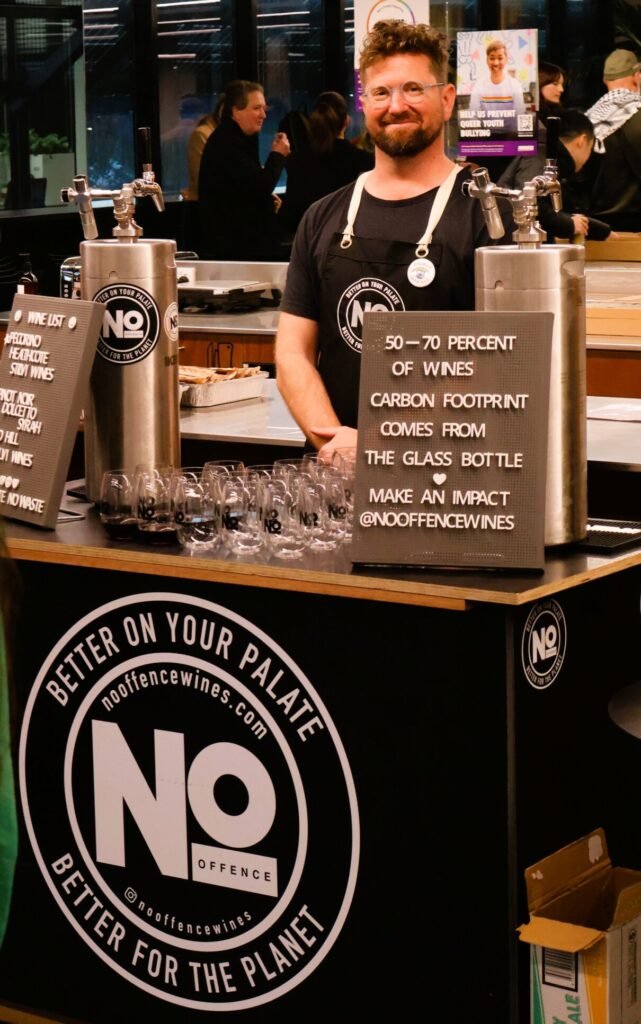
Tell us a little about the producers you work with — how do you find which to work with, and why does the keg model actually work in their favour?
We work with high quality, independent winemakers who we find through industry tasting events, regional trips, direct outreach and referrals. For them, kegging isn’t a downgrade, it’s an upside: no bottling line costs, no breakages in transit, less packaging to source and pay for, and a lower carbon footprint that matches values they already hold. Kegging is genuinely opening new doors for them, not closing old ones – and placing their wines in full view on a tap at the front of a bar, not buried in a wine list.
Do you have a favourite wine on your list?
I’m loving the Grampians Marsanne / Roussanne / Viognier from The Story Wines. Once you get your lips around the name, the wine doesn’t disappoint. Somewhere between a Pinot Grigio and a Chardonnay, think stone fruit, a nice nuttiness, a bit of zip and a nice smooth finish – perfect for this time of year!
Where do you see keg wine sitting in the Australian market in five years — niche, or standard?
We think it moves from novelty to normal, the same way craft beer on tap did- it’s already mainstream overseas, so we think it is only a matter of time. Nobody blinks now when a pub has eight taps of interesting beer – in five years we think the same will be true of wine. It won’t replace bottled wine, and it doesn’t need to; it’ll sit alongside it as the fresher, lower-waste, better-margin option for by-the-glass pours especially. The venues moving early are the ones who’ll own that positioning before it’s just expected.
What can operators/managers expect if they come and find you at Fine Food?
Come say hi and have a taste – that’s genuinely the best pitch we’ve got. We’ll have the kegs pouring so you can taste the wine fresh, exactly as your customers would get it, and we can talk through what the system might look like at your venue.. No hard sell, just a chat and a decent wine.